April 14, 2026 · 8 min
Issue Trees: The Architecture of Structured Thinking
An issue tree isn't a template to fill in. It's a way of seeing problems clearly. Here's how to build ones that actually work.
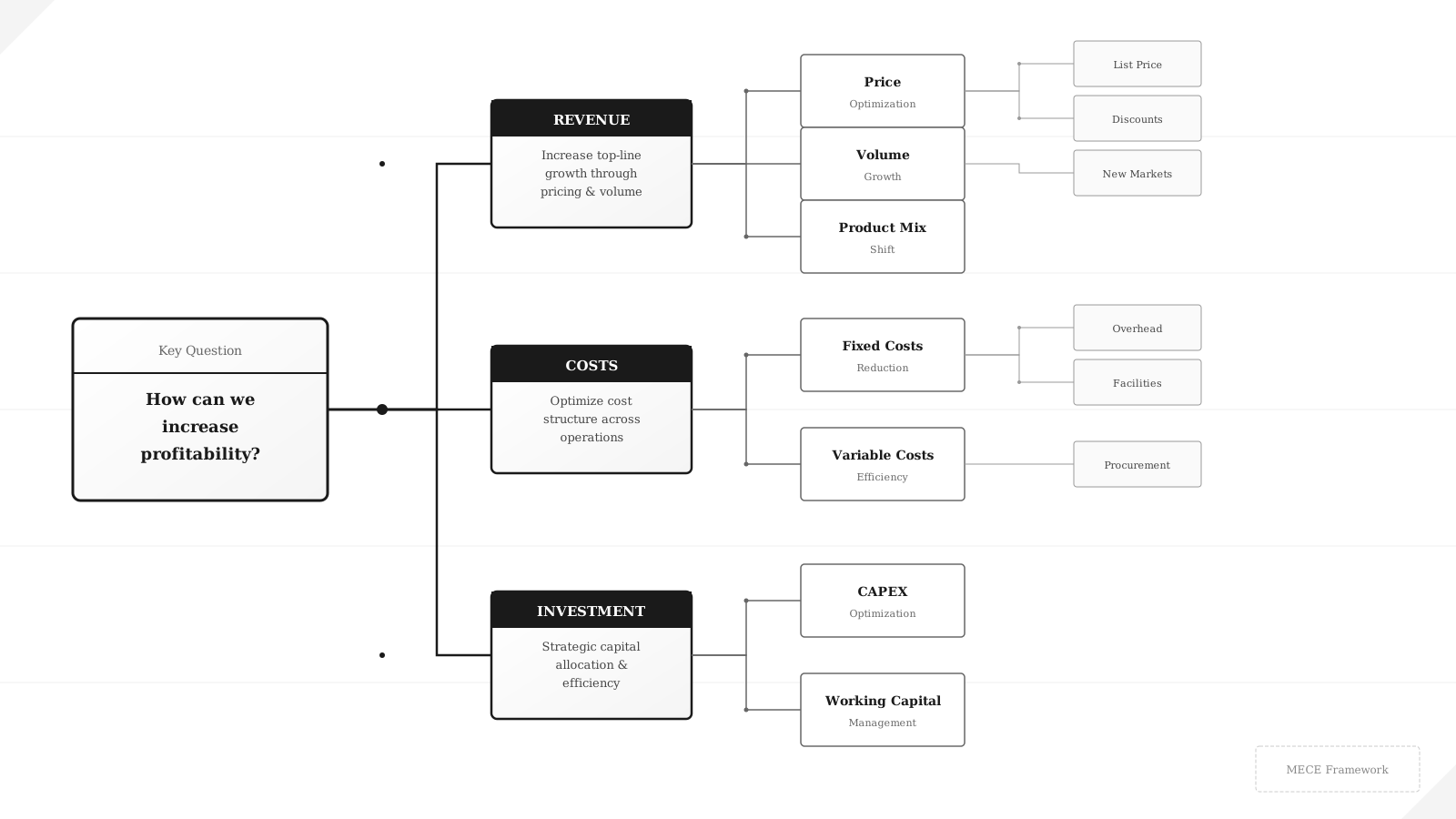
What an Issue Tree Actually Is
An issue tree is a visual decomposition of a problem into its component parts. Each branch represents a distinct, testable hypothesis about what might be causing the issue or where the answer might lie.
The power isn't in the diagram itself. It's in the discipline of forcing yourself to break a vague problem into concrete, investigable pieces before diving into analysis.
- Transforms ambiguous questions into structured investigation plans
- Creates a shared map between you and your interviewer
- Prevents the meandering analysis that sinks most candidates
The MECE Foundation
MECE—mutually exclusive, collectively exhaustive—is the structural requirement that makes issue trees useful. Each branch must cover distinct territory (no overlaps), and together they must cover all territory (no gaps).
This sounds simple until you try it. Most first-draft issue trees have subtle overlaps that create confusion or missing branches that leave blind spots in your analysis.
- Mutually exclusive: Each branch can be investigated independently
- Collectively exhaustive: The answer must live somewhere in your tree
- Test by asking: 'Is there anywhere the answer could hide outside this structure?'
Building From the Top Down
Strong issue trees start with the right first cut. The level-one branches determine everything that follows. Get this wrong, and you'll be reorganizing mid-case while your interviewer watches.
For most business problems, proven first cuts exist: revenue vs. cost for profitability, market attractiveness vs. competitive position for market entry. Learn these starting points, then adapt them to the specific context.
- The first cut should feel natural given the problem type
- Each level-one branch should be roughly equal in scope
- Avoid more than four branches at any level—cognitive load matters
Going Deep vs. Going Wide
A common mistake is building a perfectly MECE tree and then investigating every branch with equal depth. Real analysis requires prioritization. Some branches are more likely to contain the answer than others.
The best candidates build a complete structure, then articulate why they're starting with a specific branch. This shows both rigor and judgment—exactly what consulting firms are screening for.
- Complete structure demonstrates thoroughness
- Prioritized investigation demonstrates business judgment
- Explicitly stating your prioritization logic builds interviewer confidence
Common Failure Modes
The most frequent issue tree mistakes aren't about getting MECE wrong. They're about building trees that are technically correct but practically useless—too abstract to guide analysis, or too granular to communicate clearly.
Another failure mode: trees that reflect textbook frameworks rather than the specific problem. If your issue tree for a struggling restaurant chain looks identical to one for a declining software company, you haven't actually thought about the problem.
- Overly generic branches that could apply to any company
- Branches defined by activities ('analyze pricing') rather than hypotheses ('pricing is below market')
- Missing the obvious branch that the interviewer specifically wanted you to explore
Issue Trees in the Real Interview
In a live case, you typically have 60-90 seconds to build your initial structure after receiving the problem. This isn't enough time to create perfection—and interviewers don't expect it.
What they do expect: a clear first cut, MECE logic at the top level, and the ability to articulate your reasoning. You can refine the tree as you learn more. The initial structure just needs to be good enough to start.
- Verbalize your thinking as you build
- It's acceptable to say 'I might revise this as I learn more'
- Draw the tree—visual structure helps both you and the interviewer track the logic
Practice That Actually Improves Your Trees
Issue tree skill improves with deliberate practice, not just repeated exposure. The key is practicing the decomposition itself—not jumping straight to analysis after a cursory structure.
A useful exercise: Take any business headline and spend five minutes building an issue tree for it. Then critique your own structure. Where are the overlaps? What did you miss? This builds the pattern recognition that lets you structure quickly under pressure.
- Practice structuring before practicing full cases
- Time yourself to build comfort with speed
- Compare your structures to expert versions and analyze the differences