April 14, 2026 · 7 min
Market Sizing in Case Interviews: How to Estimate Without Freezing
Market sizing is not a math trick. It is a test of structure, assumptions, and calm judgment under uncertainty.
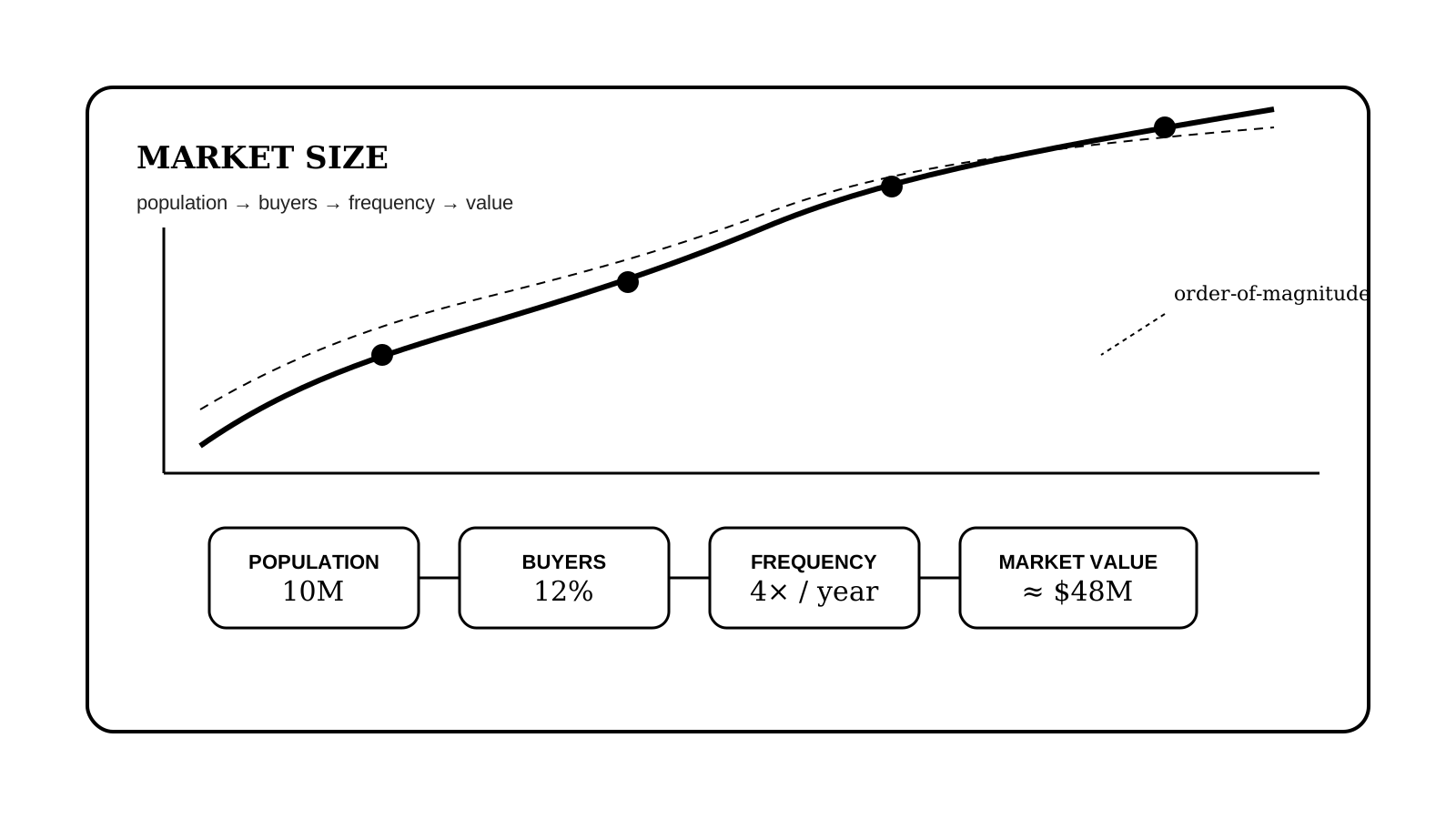
Why Market Sizing Feels Harder Than It Is
Market sizing questions trigger panic because they feel open-ended. There is rarely one exact answer, and candidates assume that means interviewers are looking for numerical genius. They usually are not.
What interviewers actually want is evidence that you can turn ambiguity into a clean estimation process. If your structure is sound and your assumptions are explicit, a rough answer can still be excellent.
- The goal is reasoned estimation, not perfect precision
- Clear assumptions matter more than fancy arithmetic
- A calm, structured answer beats a fast but messy one
Start With the Right First Cut
The first decision in market sizing is whether to go top-down or bottom-up. Top-down starts from a broad population and narrows to likely buyers. Bottom-up starts from unit economics or usage frequency and scales upward.
Neither is automatically better. The right choice depends on what makes the problem easiest to reason about. Good candidates make that choice quickly and explain it in one sentence.
- Top-down works well when the buyer population is easy to define
- Bottom-up works well when the purchase behavior is easier to estimate
- Choose the route that minimizes guesswork, not the one that sounds smarter
Build the Estimate in Layers
Strong market sizing is layered. You move from one assumption to the next in a sequence that is easy to audit. That makes your thinking easy to follow and easy to correct if an interviewer challenges one input.
For example, if you estimate the number of dog groomers in a city, you might start with households, estimate dog ownership, isolate owners who pay for grooming, estimate annual visits, then translate that into market value.
- Each step should reduce uncertainty, not multiply confusion
- Name your assumptions before calculating with them
- Keep the chain short enough that an interviewer can repeat it back
Use Round Numbers Intelligently
Round numbers are not a sign of weakness. They are a sign that you understand what level of precision the problem deserves. If you use overly specific numbers in a rough estimate, it often signals false confidence.
That said, rounding should be disciplined. Round in ways that simplify the math without distorting the logic. The purpose is to keep your mind on the structure of the estimate, not to impress anyone with mental gymnastics.
- Prefer 10%, 25%, 50%, and other clean ratios when reasonable
- Say when you are rounding and why
- Keep the estimate directionally credible even after simplification
Narrate Your Assumptions Like a Consultant
The best candidates do not hide their assumptions. They surface them early and frame them as working estimates. This gives the interviewer a chance to engage with your logic instead of wondering where your numbers came from.
A useful phrase is: 'I'll make a few simple assumptions to get to an order-of-magnitude estimate.' That signals maturity. It tells the interviewer you know this is a commercial approximation, not a census.
- State assumptions before the math, not after
- Use business language like 'order of magnitude' and 'working estimate'
- Invite correction when an assumption is especially uncertain
What Good Synthesis Sounds Like
A market sizing answer should end with a conclusion, not just a final number. Summarize the estimate, the primary drivers, and the sensitivity. This shows that you understand what actually matters in the result.
For instance: 'Based on these assumptions, I would estimate the market at roughly $40 million annually, with the biggest sensitivity being penetration rather than price.' That is the kind of synthesis that feels client-ready.
- Restate the final estimate cleanly
- Name the one or two assumptions that matter most
- Translate the number into business meaning whenever possible
How to Practice So You Stop Freezing
Most candidates practice market sizing too infrequently and too passively. They wait for it to appear in a mock case, then hope repetition alone will help. A better method is to practice one estimate a day on ordinary things: coffee shops, dental clinics, private tutors, niche software buyers.
The goal is not just repetition. It is building comfort with the rhythm: define scope, choose approach, state assumptions, calculate cleanly, synthesize. Once that rhythm becomes familiar, the panic drops fast.
- Practice the process, not just the final answer
- Use everyday markets so you can focus on structure
- Time-box yourself to build fluency under pressure