April 14, 2026 · 7 min
Profitability Cases: How to Find the Real Margin Driver Fast
The strongest answers in profitability cases separate symptom from cause quickly, then focus analysis where the economics actually moved.
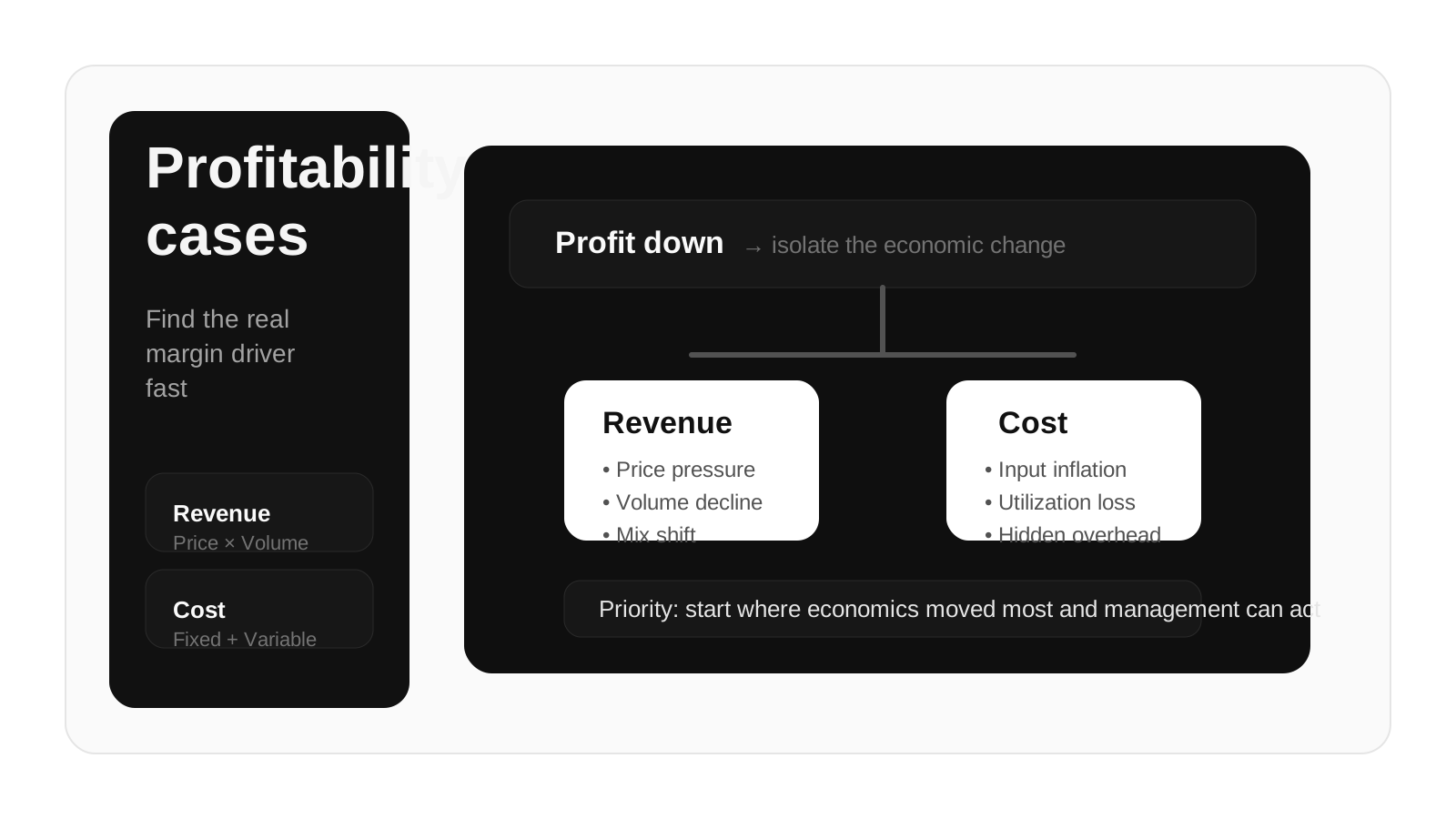
Start by Separating the Symptom From the Cause
A profitability case usually starts with a simple statement: profits are down. That statement is only a symptom. Your job is to identify the economic change underneath it, not to repeat the formula back to the interviewer.
The fastest way to do that is to ask what specifically changed: revenue, cost, or both; whether the issue is recent or structural; and where the movement is concentrated. That turns a broad prompt into a diagnostic path.
- Profit decline is the symptom, not the answer
- Ask what changed before you expand the tree
- Localizing the movement saves time later
Use the Simplest Decomposition That Can Reveal Movement
Most profitability cases do not require an elaborate framework at the start. Revenue can usually be split into price and volume, while cost can be split into variable and fixed or into the few categories that actually matter in the case context.
The point is not elegance for its own sake. It is to choose a structure that makes change visible quickly. If your first cut hides where the margin moved, it is the wrong first cut.
- Revenue: begin with price × volume
- Cost: choose buckets that are easy to test with data
- Only add detail after a top-level branch starts to matter
Anchor the Analysis in Segments Early
When candidates stay at the total-company level for too long, they often miss the real story. Profitability problems usually sit in a segment: one customer group, one geography, one product line, one channel, or one period of time.
Segmenting early helps you avoid averages that hide the answer. Flat company revenue can still mask a sharp mix shift away from high-margin customers. Rising total cost can still come from one operational bottleneck rather than the whole system.
- Segment before you over-analyze the average
- Look for where margins changed, not just where totals changed
- Product, customer, channel, and geography are often the highest-yield cuts
Prioritize the Branch With the Highest Economic Leverage
A complete structure is good. An unprioritized structure is weak. After laying out the main branches, say where you would start and why. That shows judgment, not just organization.
Good prioritization usually follows one of three logics: the branch with the largest absolute movement, the branch most consistent with the facts you have, or the branch most likely to reveal a management decision.
- State your starting branch explicitly
- Tie prioritization to evidence, not instinct alone
- Choose the path most likely to produce an actionable answer
Watch for the Classic Profitability Traps
Interviewers often design profitability cases around recurring patterns. The most common are price erosion, volume loss in premium segments, unfavorable mix shift, raw-material inflation, under-utilized capacity, and hidden service or logistics costs.
You do not want to guess these prematurely. You do want a structure that can surface them quickly if they are present. Strong candidates recognize the pattern only after the analysis earns it.
- Price cuts can help volume while hurting contribution margin
- Mix shift can reduce profit even when top-line revenue holds steady
- Operational under-utilization often shows up as worse cost per unit
Turn Diagnosis Into a Management Answer
A profitability case is not finished when you find the driver. It is finished when you translate that driver into a decision. If margin is falling because the company is over-serving low-value customers, the answer is not just to say that out loud. It is to recommend what the company should do differently.
That recommendation should be specific enough to sound real: adjust pricing selectively, simplify the offer, improve utilization, renegotiate input costs, or shift focus back to higher-margin segments.
- Diagnosis should lead to action
- Recommendations should match the economics you found
- Keep the answer practical, not abstract
What a Strong Final Synthesis Sounds Like
The best synthesis is short, sharp, and decision-oriented. It identifies the main driver, the evidence behind it, and the implication for management. That is what makes the answer feel consultant-like.
For example: 'Profitability is down mainly because the company lost volume in its highest-margin segment while fixed costs remained stable, so I would focus first on retention and pricing discipline in that segment before broad cost cutting.' That answer lands because it is both analytical and actionable.
- Lead with the primary driver
- Support it with the key evidence, not the full case recap
- End with an action that follows directly from the analysis