April 14, 2026 · 7 min
The Pyramid Principle: Answer First, Explain Second
Consultants communicate differently. The Pyramid Principle is why. Here's how to internalize it before your interview.
Why Answer-First Changes Everything
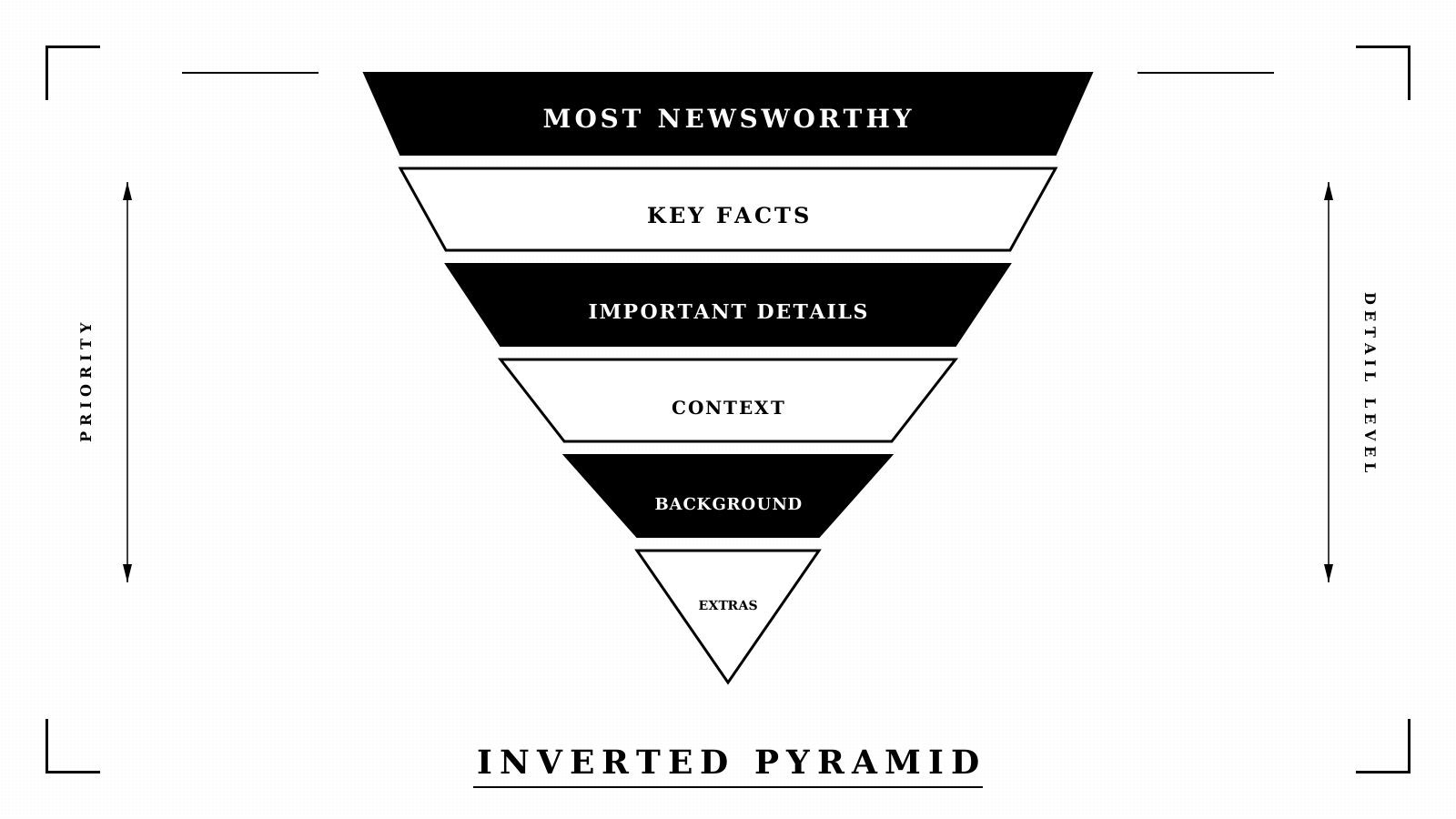
Most people communicate chronologically: here's what I did, here's what I found, here's my conclusion. Consultants invert this entirely: here's my answer, here's why, here's the supporting evidence.
This isn't a stylistic preference. It's a functional requirement when your audience is a time-pressed executive who needs to make decisions quickly. The same applies to your interviewer, who's evaluating whether you can communicate like someone they'd put in front of a client.
- Lead with the conclusion, not the journey
- Busy stakeholders need to know the answer before deciding if they want the detail
- This structure makes your thinking easier to follow and critique
The Structure of a Pyramid
A pyramid has one answer at the top, supported by typically three key arguments (your 'pillars'), each supported by evidence and analysis. The listener can stop at any level and have a complete, if less detailed, understanding.
The elegance is in the modularity. If someone only has 30 seconds, they get your answer and three reasons. If they have five minutes, they get the supporting logic. If they have an hour, they can drill into every piece of evidence.
- One governing thought at the apex
- Three to four supporting arguments at the second level
- Evidence and detail at the third level, accessible on demand
SCQA: Setting Up Your Answer
Before you deliver your pyramid, your audience needs context. SCQA—Situation, Complication, Question, Answer—is the setup that makes your answer land.
The Situation establishes shared understanding. The Complication introduces the tension or problem. The Question crystallizes what you're solving. The Answer is the apex of your pyramid. This entire setup can take 20 seconds, but it transforms how your answer is received.
- Situation: 'We were asked to evaluate the market entry opportunity'
- Complication: 'However, the market is more competitive than initially expected'
- Question: 'Should we enter, and if so, how?'
- Answer: 'Yes, but through acquisition rather than organic entry'
Grouping and Ordering Your Arguments
The three arguments supporting your answer must follow MECE logic—they shouldn't overlap, and together they should be sufficient to justify your conclusion. If any argument is weak or missing, the pyramid collapses.
Order matters too. Lead with your strongest argument if all are independent, or follow logical sequence if there's a natural flow. Never bury your best supporting point.
- Arguments should be parallel in structure and scope
- Each should independently strengthen your answer
- Consider your audience when choosing order—lead with what they care most about
Applying This in Case Interviews
Every time you present a synthesis or recommendation in a case interview, you're building a mini-pyramid. The interviewer asks 'What do you think?'—and your answer should start with the answer.
The common mistake is thinking out loud toward a conclusion. The interviewer watches you meander through considerations, waiting for your actual point. By the time you reach it, they've lost the thread. Flip the structure: state your conclusion, then walk through your reasoning.
- 'I recommend we enter the market through partnership, for three reasons...'
- 'The profitability decline is primarily driven by cost, specifically raw materials...'
- 'Based on my analysis, the acquisition is attractive at this price...'
When to Build the Pyramid in Real Time
Sometimes you'll be asked for a recommendation before you've fully formed one. This is a test of whether you can synthesize under pressure—a critical consulting skill.
The technique: take a brief pause (5-10 seconds is acceptable), structure your thoughts into an answer and two or three reasons, then deliver in pyramid form. Even a preliminary recommendation should follow this structure. Hedging is fine—'My initial view is X, pending further analysis on Y'—but hedge with structure, not rambling.
- Brief pauses for structuring are professional, not awkward
- A structured preliminary answer beats an unstructured certain one
- Practice this specific skill: synthesize and deliver in under 30 seconds
Training Your Default Communication Mode
The Pyramid Principle feels unnatural at first because it requires knowing your conclusion before you start speaking. This demands a different kind of preparation—you think through to the answer, then communicate backward from it.
The way to make this automatic is practice in low-stakes situations. Start emails with your request or conclusion. Answer questions in meetings with your point first. Over time, answer-first becomes your default mode, and case interviews feel like normal conversation.
- Practice in everyday communication, not just interview prep
- Record yourself answering case questions and evaluate the structure
- Ask: 'Did I state my answer in the first sentence?'