July 15, 2026 · 7 min
Hypothesis-Driven Problem Solving: Think Like You Already Have an Answer
Boiling the ocean is the default failure mode of smart people. Hypothesis-driven work is the discipline that prevents it.
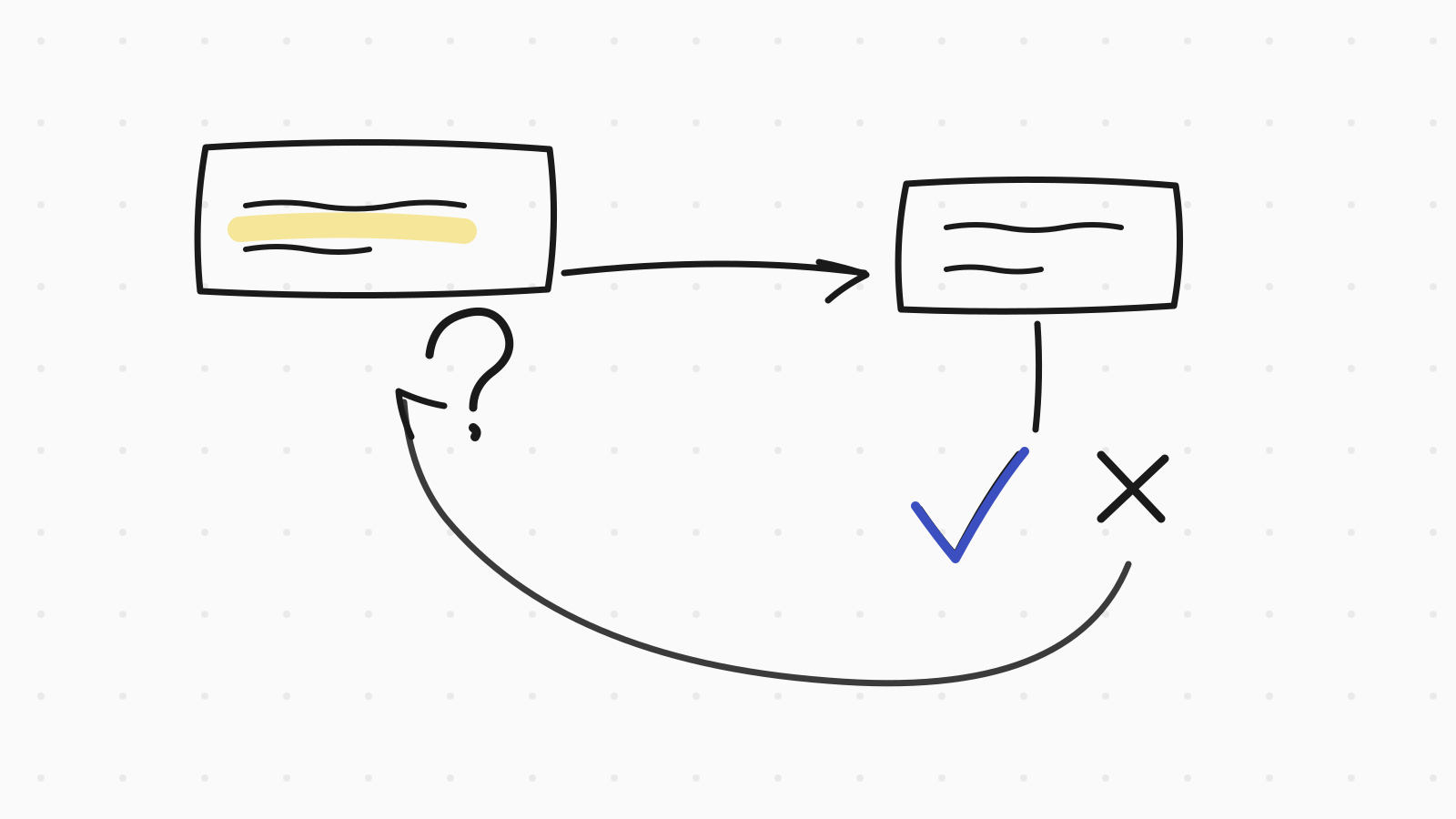
The Day-One Answer
Consulting teams do something that feels backwards to most analysts: they write down an answer before doing the analysis. Not a guess pulled from thin air — a structured, falsifiable best current belief about what the answer will turn out to be.
The day-one answer isn't a commitment. It's a navigation device. Once you have a candidate answer, every piece of analysis has a job: confirm it, kill it, or refine it. Without one, analysis becomes archaeology — digging everywhere and hoping something turns up.
- A hypothesis converts open-ended research into targeted testing
- Being wrong early is cheap; being directionless for weeks is expensive
- The quality bar: someone could design an analysis to disprove it
Why Boiling the Ocean Feels Productive
The alternative to hypothesis-driven work is exhaustive work: analyze everything, then synthesize. It feels rigorous. It produces impressive-looking workplans. And it reliably runs out of time before it runs out of branches.
The trap is psychological: gathering data feels like progress and carries no risk of being wrong. Stating a hypothesis exposes you. That exposure is exactly what makes the method work — it forces your reasoning into the open where it can be tested and corrected.
- Exhaustive analysis optimizes for coverage, not for the decision
- Most branches of most problems don't matter to the answer
- Hypotheses put your judgment on the table early, where it can improve
Good Hypotheses Are Specific and Falsifiable
'Costs are too high' is not a hypothesis — it's a restatement of the problem. 'Unit costs rose because the two new plants are running below 60% utilization' is a hypothesis: specific, testable, and pointing directly at the analysis that would confirm or kill it.
The specificity is the point. A vague hypothesis generates vague workstreams. A sharp one tells you exactly which two or three numbers you need, who has them, and what you'll conclude in either outcome.
- Include the mechanism, not just the direction ('because…')
- Ask: what data would make me abandon this?
- If any evidence would be 'interesting', the hypothesis is too loose
Design Killer Analyses, Not Complete Ones
For each hypothesis, the question is not 'what could we analyze?' but 'what is the fastest analysis that could kill this?'. Consultants call these killer analyses — the tests with the highest information value per hour of work.
This inverts the usual instinct. Instead of starting with the easy analyses and working up, you start with the one most likely to change your mind. If the hypothesis survives its hardest test, the supporting detail can follow. If it dies, you just saved a week.
- Rank analyses by their power to change the answer, not by convenience
- One decisive test beats five corroborating ones
- Time-box tests: if it takes a week, it's a workstream, not a test
Iterate: The Hypothesis Tree Evolves
Hypothesis-driven doesn't mean stubborn. The whole structure is built to be revised: when evidence kills a branch, you mark it dead, harvest what you learned, and promote the next most likely explanation.
Strong teams make this evolution visible. The issue tree carries the status of every hypothesis — supported, unsupported, in progress — so anyone can see the current state of the argument at a glance. The tree is the living record of the thinking, not a kickoff artifact.
- Killing a hypothesis is progress, not failure — record why
- Re-sort priorities after every significant finding
- Keep the tree current: a stale tree misleads everyone reading it
The Interview Version of This Skill
In case interviews, hypothesis-driven behavior is one of the clearest signals interviewers screen for. After structuring the problem, strong candidates say where they'd start and what they expect to find — then let the data confirm or redirect.
The weak version sounds like a checklist being read aloud. The strong version sounds like someone hunting: 'Given the recent decline and the competitor's price move, my hypothesis is that this is a volume problem in the premium segment — I'd test that first by looking at volume by segment.'
- State the hypothesis and the test in the same breath
- Update out loud when data contradicts you — that's the skill on display
- Never cling: 'that kills my hypothesis, which points to X instead' is a winning sentence
Making It a Habit
The method becomes natural when you practice the uncomfortable part: committing to a belief before you feel ready. Start every piece of work — a memo, an analysis, a case — by writing one sentence: 'My current best answer is X, because Y.'
Then design the single fastest test of that sentence. Over time this pattern compounds into the consultant's core reflex: always know what you believe, always know what would change your mind, and always be running the test that matters most.
- Write the day-one answer down — unwritten hypotheses drift
- Review old hypotheses against outcomes to calibrate your judgment
- Speed comes from direction, not from working more hours