July 15, 2026 · 6 min
Answer-First Writing: Documents That Executives Actually Read
Most business writing buries the point. Consulting documents put it in the first line — and structure everything else beneath it.
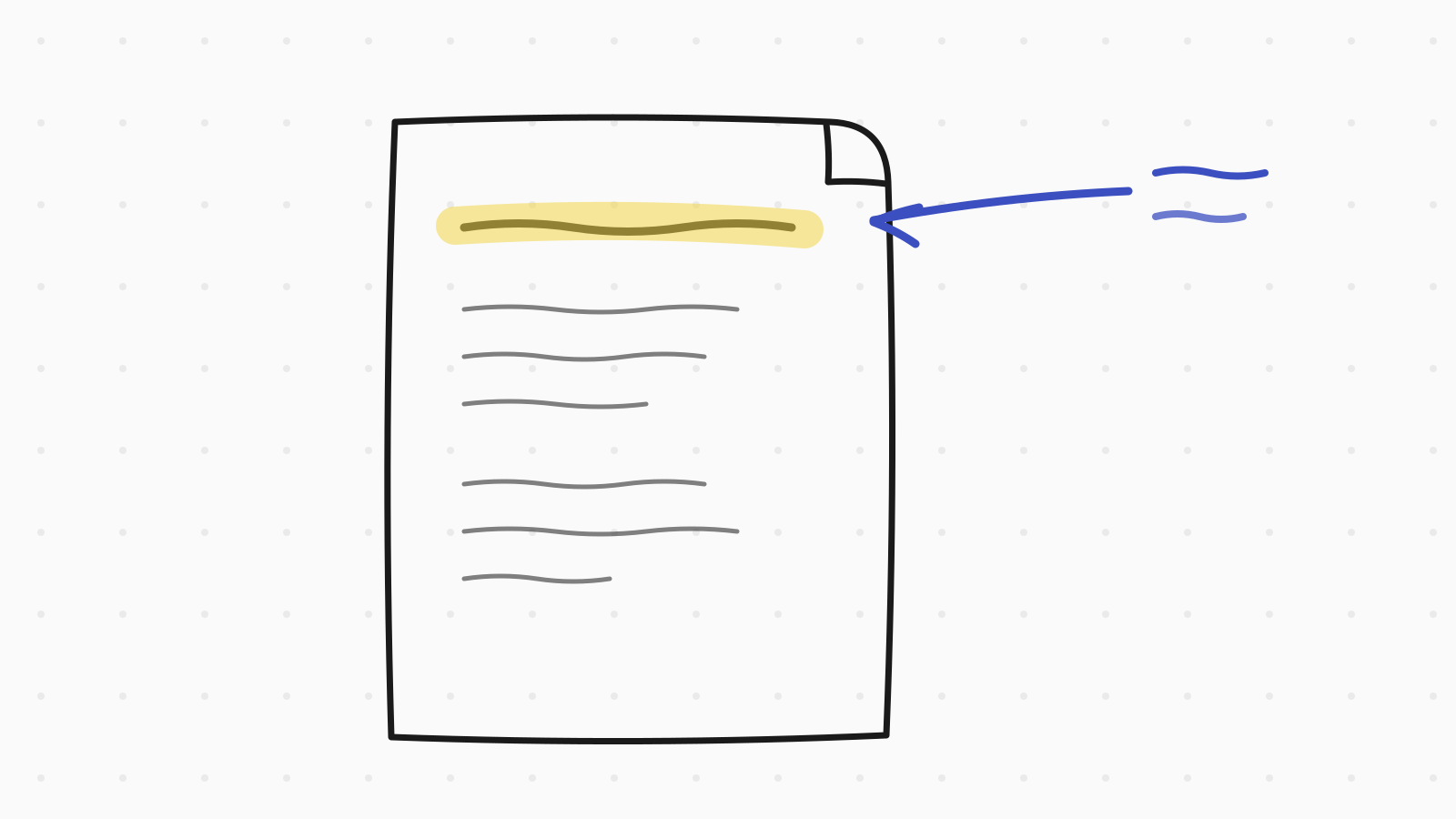
The First Line Is the Document
Here is the uncomfortable truth about executive readers: most of them read the first paragraph, skim the headings, and stop. If your answer lives in the conclusion, most of your audience never meets it.
Answer-first writing accepts this reality instead of fighting it. The recommendation goes in the first line. The document that follows exists to let readers verify it to whatever depth they choose — one paragraph, one page, or the full argument.
- Write for the reader who stops after paragraph one
- Every deeper level is optional verification, not new information
- If the first line got deleted, the document should feel broken
Structure: One Answer, Three Supports
The body of an answer-first document mirrors a pyramid: the governing thought at top, three or four supporting arguments as sections, and evidence inside each section. Each section heading should be a claim, not a topic.
'Pricing' is a topic heading — it promises nothing. 'Pricing is 8% below market and explains most of the margin gap' is a claim heading — a reader who only reads headings still receives the full argument.
- Headings are sentences with verbs, not category labels
- Reading only the headings should reconstruct the argument
- Three strong supports beat six weak ones — cut the rest
SCR: The Setup That Earns the Answer
An answer with no setup can feel abrupt or unearned. The consulting solution is the SCR opening: Situation (what we all agree is true), Complication (what changed or broke), Resolution (your answer). Three sentences, then the pyramid.
The discipline is keeping each part honest. The Situation must be genuinely uncontroversial. The Complication must be the real tension, not manufactured drama. And the Resolution must actually resolve it — not describe further process.
- Situation: no news, just shared ground
- Complication: the reason this document needs to exist
- Resolution: the answer — not 'we should study this further'
Evidence Placement: Push Detail Down
Answer-first writing dies when detail floods upward. The instinct to prove everything immediately produces first pages full of methodology, caveats, and tables — exactly the material that belongs in lower levels or appendices.
The rule: each level of the document should contain only what the reader needs to decide whether to go one level deeper. Numbers that support a claim live under that claim. Methodology lives where a skeptic would look for it, which is never page one.
- Page one carries claims; appendices carry proof
- One number in the first paragraph beats a table
- Caveats belong next to the claims they qualify, at depth
The Editing Pass That Makes It Work
Nobody drafts answer-first naturally — thinking happens chronologically, so first drafts are journeys. The method is applied in revision: find your conclusion (usually in the last third), move it to the top, and rebuild the document beneath it.
Then run the deletion test on every paragraph: if removing it doesn't weaken the argument, remove it. Documents built this way get shorter and sharper with each pass, which is the opposite of how most business writing evolves.
- Draft freely, then invert: conclusion first
- Delete anything the argument doesn't need
- Read only your headings aloud — do they make the case?
Where Answer-First Applies (Almost Everywhere)
The pattern scales down as well as up. An email: request in line one, context after. A Slack message: the ask, then the background. A performance review, a project update, a board memo — every one improves when the point leads.
The exceptions are genuinely exploratory documents — brainstorms, research logs — and moments where the answer needs emotional preparation. Those are rarer than writers think. Default to answer-first and deviate consciously.
- Emails: the request is the subject line and the first sentence
- Updates: status and implication first, activity log last
- When in doubt, lead with the point — readers can always keep reading