July 21, 2026 · 7 min
Synthesis: How to Close a Case Like a Consultant
The last two minutes of a case are weighted like the first twenty. Most candidates improvise them. Here's the structure that makes closings land.
Why Synthesis Is Weighted So Heavily
The closing synthesis simulates the moment consulting actually gets judged: the partner has ninety seconds with the CEO and must convert three weeks of analysis into a decision. Firms weight it heavily because it's the skill they sell.
It's also where interviewers separate candidates who tracked the case's meaning from candidates who merely survived its sections. A synthesis reveals instantly whether you knew, at every point, why you were doing what you were doing.
- The close simulates the partner-to-CEO moment firms are hired for
- A strong synthesis can rescue a wobbly middle; a weak one undoes a strong case
- Interviewers listen for meaning, not a replay of activities
The Structure: Answer, Drivers, Risks, Next Steps
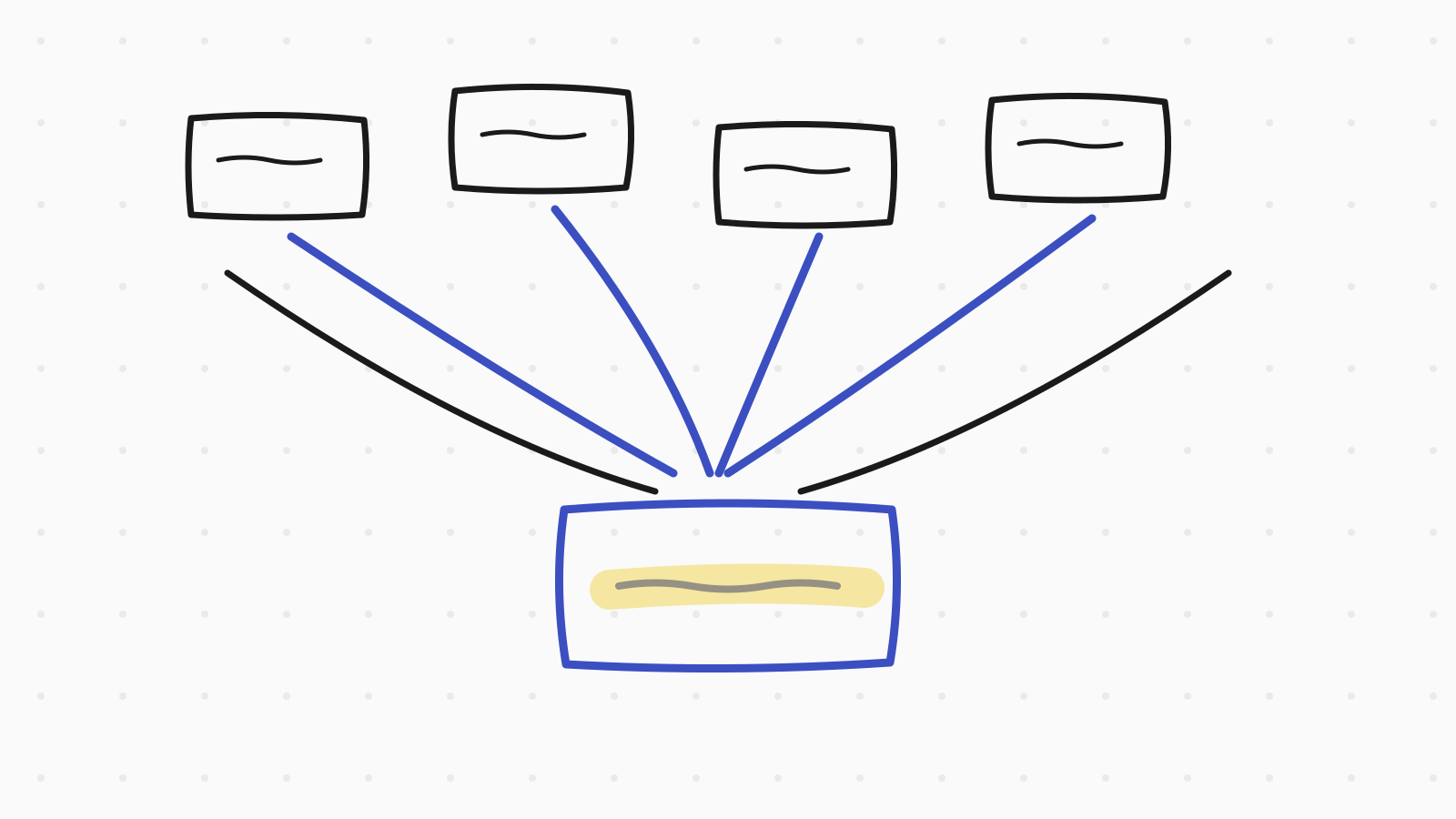
Open with the answer to the original question in one sentence—no wind-up, no 'so, to summarize what we did.' Then give the two or three findings that drive it, each with its number attached. Then one honest risk. Then the immediate next step.
The whole thing should run sixty to ninety seconds. Anything longer means you're summarizing the process instead of answering the question, which is the single most common synthesis failure.
- Sentence one is the recommendation—verbatim answer to the opening question
- Two or three drivers, each carrying its supporting number
- One risk plus one next step signals ownership beyond the analysis
Answer the Question That Was Asked
Cases drift. You start on profitability, detour through pricing, and end in operations. The synthesis must snap back to the original question—the one the interviewer read aloud thirty minutes ago. Write that question in a corner of your first page and point your closing at it.
If the case revealed that the real problem differs from the stated one, say both: 'You asked whether to cut price. The analysis says no—and it says the real issue is channel mix, which is where I'd focus next.' That reframe, grounded in evidence, is a top-tier close.
- Write the opening question down verbatim and close against it
- If the real problem shifted, name the shift explicitly
- Never let the interviewer wonder which question you're answering
Numbers Are the Spine
A synthesis without numbers is a vibe. Every driver you cite should carry the figure that earned it a place: 'Margin erosion is concentrated in the retail channel, which lost eight points in two years while wholesale held flat.' The numbers are what make the recommendation feel inevitable rather than asserted.
This is why note-keeping during the case matters. Candidates who labeled and boxed their intermediate results synthesize from their page. Candidates who scribbled compute the close from memory, and it shows.
- Each driver carries the number that proves it
- Box key results during the case—your synthesis is assembled from them
- Rounded numbers delivered fluently beat precise numbers delivered haltingly
The CEO-Walks-In Variant
Some interviewers force the issue: 'The CEO just walked in—she has thirty seconds, what do you tell her?' This is a compression test. The answer is the recommendation and the single strongest driver. Nothing else survives the cut.
Practice this compression deliberately: for every case you complete, deliver a ninety-second close and then a thirty-second close. If the thirty-second version is hard, you haven't decided what actually matters—which is the diagnosis the drill exists to make.
- Thirty seconds: recommendation plus the one driver that carries it
- Practice both durations on every case you run
- Struggling to compress means the prioritization isn't done yet
Risks Without Hedging
Naming a risk is not hedging—it's the opposite. 'The recommendation holds unless churn in the enterprise segment exceeds ten percent' commits you to a threshold. Hedging is vague ('of course, there are risks'); a threshold is a falsifiable claim, and falsifiable claims read as confidence.
Pick the one risk that could genuinely flip the answer, not a laundry list. Then attach the next step to it: the analysis or pilot that would resolve the uncertainty fastest. Recommendation, risk, resolution—one clean line of ownership.
- State risk as a threshold, not a mood
- One decisive risk beats a defensive list of five
- The next step should be the fastest way to retire that risk
Training the Muscle
Synthesis improves faster than any other case skill because the reps are cheap. Read any business article and close it like a case: answer, drivers, risk, next step, out loud, under ninety seconds. Ten articles teaches more than three full cases.
In mock interviews, ask your partner to cut you off mid-case and demand the synthesis-so-far. If you can close cleanly from an unfinished case, the real closing—with the full picture in hand—stops being frightening at all.
- Drill closings on news articles—cheap, fast, high transfer
- Practice mid-case syntheses to build the always-ready habit
- Record yourself once; the filler words will motivate the next rep