July 29, 2026 · 7 min
Custom Frameworks: When to Leave the Textbook Behind
Memorized frameworks get candidates through screening rounds and fail them in finals. Here's how to build problem-specific structures on the spot.
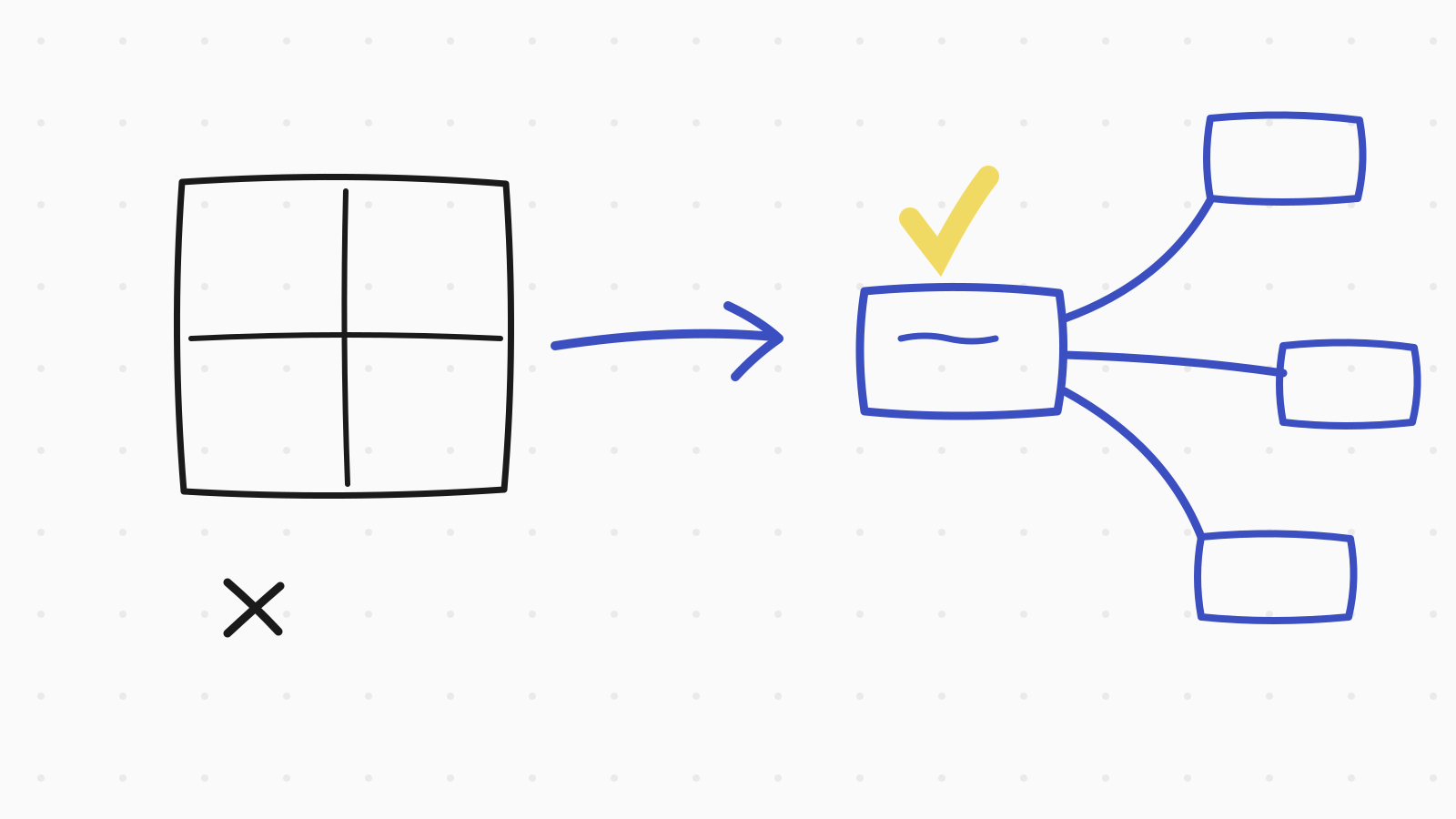
Why Memorized Frameworks Hit a Ceiling
Standard frameworks encode real logic, and learning them is the right first step. The ceiling appears when the framework drives the analysis instead of the problem: the candidate recites four buckets that fit any company, and the interviewer hears a template where they wanted thinking.
Final rounds are designed to find this ceiling. Partners deliberately run unusual cases—a nonprofit's funding model, a sports league's scheduling problem, a government procurement question—precisely because no memorized structure fits them cleanly.
- Frameworks are training wheels: necessary first, limiting later
- Generic buckets that fit any company signal template recitation
- Final-round cases are chosen to break memorized structures
Custom Doesn't Mean Invented From Nothing
A custom framework is usually a standard skeleton, visibly adapted. The profitability tree still applies to the struggling opera house—but the revenue branch becomes ticket revenue, philanthropy, and public funding, each with different drivers. The adaptation is what reads as thinking.
The reliable method: start from the client's actual money flow or decision, decompose it MECE, and only then check whether a known framework agrees. Deriving toward the framework beats reciting from it, even when both land in the same place.
- Adapt visibly: rename branches in the client's own vocabulary
- Derive from the money flow, then reconcile with known structures
- Same destination, different direction—derivation reads as judgment
Three Reliable Derivation Engines
When no template fits, three engines generate sound structures on demand. The equation engine: write the outcome as arithmetic (profit = price × volume − cost) and branch on each term. The process engine: follow the value chain or customer journey and ask where the problem enters. The stakeholder engine: list who must act differently and what each needs.
Pick the engine that matches the question's nature—economic questions want equations, operational questions want processes, change questions want stakeholders. Announcing the choice ('I'll structure this along the patient's journey') is itself a scoring move.
- Equation engine for economic questions—branch on arithmetic terms
- Process engine for operational questions—walk the chain, find the leak
- Stakeholder engine for adoption and change questions
Keeping Custom Structures MECE
The risk of improvising is losing the discipline that made frameworks valuable. After sketching a custom tree, run the two checks explicitly: could an answer hide outside these branches, and could one finding live in two branches at once? Thirty seconds of checking prevents the mid-case collapse.
Anchoring to an equation helps here: structures derived from arithmetic identities are MECE by construction. That's why the profit equation remains the most trusted derivation engine—its completeness is mathematical, not asserted.
- Run the gap check and the overlap check aloud after sketching
- Equation-derived trees inherit MECE from the arithmetic
- It's fine to restructure mid-case if you announce it and explain why
The Delivery That Sells It
Present a custom structure with its reasoning attached: 'Given this is fundamentally an adoption problem, I'll structure around the three groups who must change behavior, rather than a standard profitability view.' The one-sentence rationale converts an unusual tree from risky to impressive.
Then hold the structure lightly. Custom frameworks earn their keep in how they respond to new information—prune branches that die, grow ones that matter, and narrate the pruning. Rigidity with a custom structure is the same failure as rigidity with a memorized one.
- One sentence of rationale legitimizes any sound structure
- Narrate pruning and growth as evidence arrives
- The structure serves the answer, never the reverse
Training the Skill
Practice on problems that have no template: how should a museum price admission, why are emergency-room waits growing, should a city bid for the Olympics. Five minutes each, structure only, then critique your own tree for gaps and overlaps.
A second drill builds flexibility: take one prompt and structure it three different ways—by equation, by process, by stakeholder. Feeling how each lens changes the analysis is what makes the choice of lens deliberate in the room.
- Drill on template-less prompts: museums, cities, hospitals, leagues
- Structure one prompt three ways to internalize the lens choice
- Critique your own trees—self-spotted overlaps teach fastest